





Awarded at the World Film Festival in Cannes during the April 2025 edition with Best Actress in a Short Film and Best Female Director in a Short Film, Living With Grandma is Finise Avery’s directorial debut. A conversation.
Hey Finise! Thank you so much for speaking with us today. Living With Grandma was awarded Best Actress in a Short Film and Best Female Director in a Short Film. Would you like to share a comment?
Thank you so much — it means a lot. Living With Grandma came from such a personal and collaborative place, so seeing it connect with audiences has been incredibly rewarding. I’m especially proud of Bonnie Rose’s recognition because she brought so much warmth, vulnerability, and humor to the role. Awards are beautiful moments, but for me they also reflect the trust, creativity, and heart of the entire cast and crew.
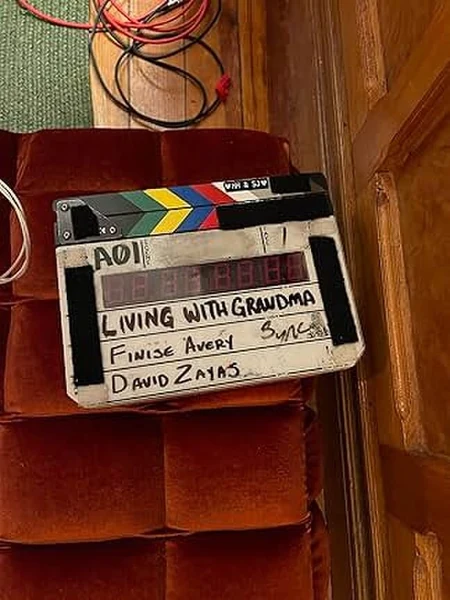
Living With Grandma is your first film. Can you tell us about how you picked this or chose this and why?
I wanted to tell a story that felt personal but could connect universally. The project actually started with my childhood friend Louis Cangiano, who began sharing stories and voice notes about his life and relationship with his grandmother. What began as conversations and an episodic idea slowly evolved into a short film. I was drawn to the emotional contradictions in it — addiction, family, humor, caregiving, and the complicated ways people show love. I wanted to tell a story that felt grounded and personal but also reflected something universal.
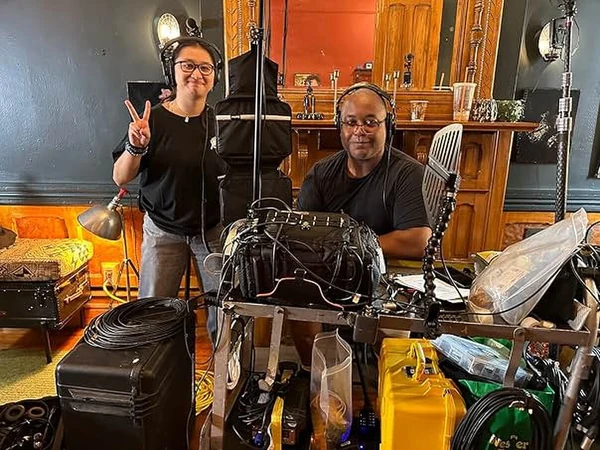
Did you come across any financial difficulties to fund your film?
Absolutely. Independent filmmaking is always a balancing act financially. My background working across production and accounting actually became an advantage — it helped me understand where to invest and where to simplify. We relied on relationships, resourcefulness, and a team of people who genuinely believed in the project. Sometimes limitations force creativity, and I think that helped shape the film in unexpected ways.
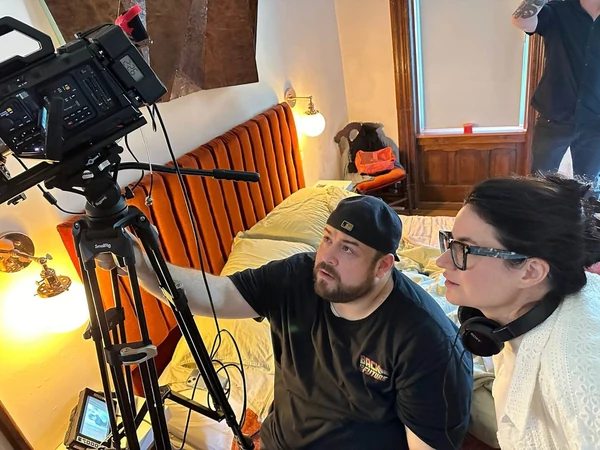
Your cast is amazing! Can you tell us more about your casting process and how you came to choose Bonnie Rose, who was awarded for her performance?
Casting was everything because the tone of this film lives in the performances. Bonnie Rose was actually the first person I thought of for Grandma, before the script was even finished. I had worked with her before and knew she could balance humor, warmth, and emotional honesty. A lot of the cast came through relationships I’d built over years working in the industry, and I wanted actors who felt authentic rather than performative. Once Bonnie came on board, the world of the film really started to click into place.
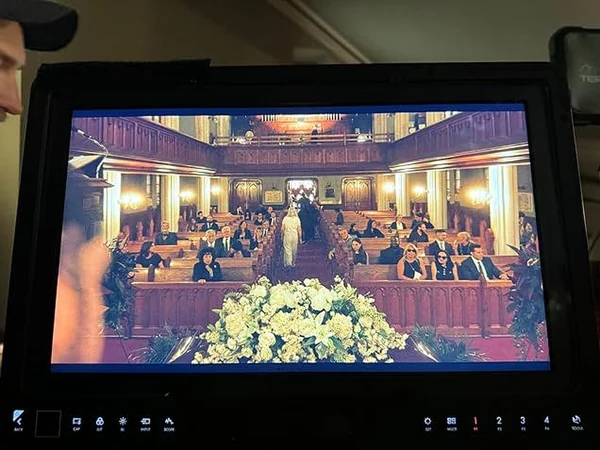
This is a very sensitive story. Not only are you tackling the AA-style workshops becoming common these days, but also themes of addiction and the inter-generational gap between Louis and Grandma. How did you approach this?
I wanted to approach those themes with empathy rather than judgment. Addiction doesn’t always look the way people expect, and I was interested in exploring recovery, coping mechanisms, and family relationships through a more human lens.
At its core, the film isn’t really about addiction — it’s about connection. The relationship between Louis and Grandma became a way to explore how different generations express love, process pain, and care for one another. Even when people communicate differently, they’re often searching for the same thing: understanding, acceptance, and connection.
Humor was also important to me. I didn’t want the film to feel heavy-handed because life rarely separates the funny from the difficult — they often exist side by side.
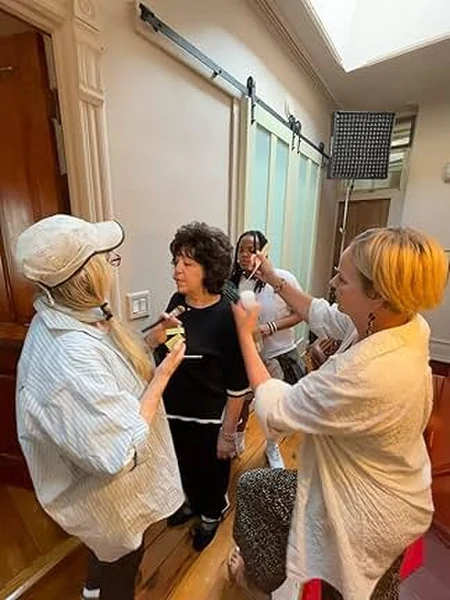
One of our favorite scenes, other than the flower shop, is the connection with Alexa and the divorce scene. Is comedy the best fit to explore the themes that are important to you?
Comedy has always felt like one of the most honest ways to talk about difficult things. Life rarely separates the funny from the painful — they usually happen side by side. Humor lets audiences lower their guard and connect emotionally without feeling overwhelmed. I love stories that can make you laugh and then catch you off guard emotionally a moment later. That balance is where I feel most at home creatively.
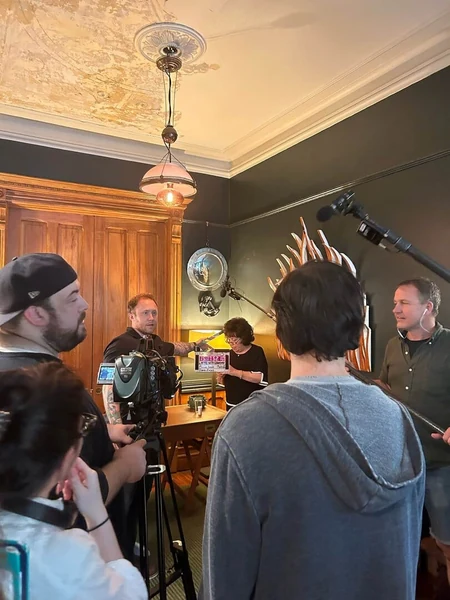
Tell us about your upcoming projects? Do tell us more about your role as Representative on the Focus on Women Committee and the founding of Reel Solidarity.
Right now, Desperately Seeking Commitment is in its festival run, and I’m also exploring bringing Living With Grandma to Off-Broadway, which has been exciting to think about in a live format.
This summer, I’m preparing to shoot my next short film, Girlfriend 2.0 — about a woman who undergoes a cutting-edge emotional therapy using a simulated version of herself and is forced into a surreal battle of identity against a version optimized to be everything the world wants.
Outside of directing, I serve as a Representative on the DGA Focus on Women Committee and continue building Reel Solidarity, focused on community, mentorship, and expanding access within film and television.
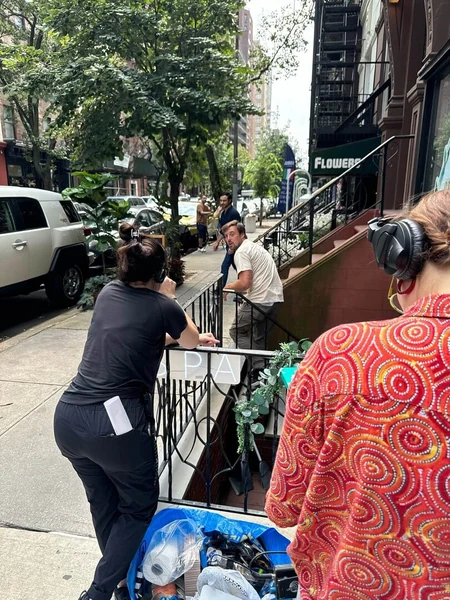
How do you see the future of cinema in the post-COVID era?
Post-Covid cinema has changed how we watch and how we connect. Today, technology drives so much of our viewing — people consume endless short content on their phones, with platforms like YouTube now feeling more like Instagram. Audiences are often streaming films at home, sometimes in the background as noise, rather than committing to the theater experience. However, this shift also creates opportunities: it challenges filmmakers to create bold, authentic work that cuts through distractions and reminds us of the magic of communal cinema. I believe the future lies in balance — embracing new formats and platforms while still protecting the theater as a place of immersion, empathy, and shared humanity.
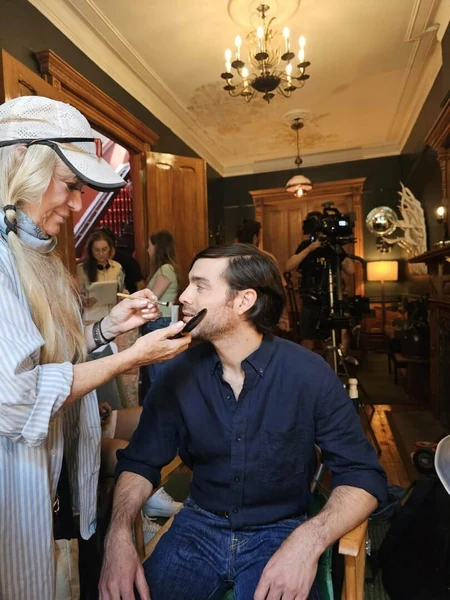
BIO
Biography of Finise Avery
“Living With Grandma came from such a personal and collaborative place.”
Finise Avery is a New York-based director, writer, and producer celebrated for her sharp visual storytelling and dedication to narratives that explore character, identity, and social equity. A member of the Directors Guild of America (DGA) and SAG-AFTRA, Finise balances her experience on major studio productions with a passion for bold, independent filmmaking.
Her directorial debut, Living With Grandma, has received international acclaim, earning Best Female Director at World Film Festival in Cannes, Best First Time Director at both LAFA and London, and multiple top honors from Oniros Film Awards, Rome International Film Festival, Cineplay, and Athens. The film’s distinctive tone and heartfelt performances continue to resonate across the festival circuit.
In 2025, Finise expanded her creative reach with CRUNCH, a 60-second dark comedy spec ad created for the Musicbed Challenge. Set in a death row execution chamber, the piece delivers a cinematic twist on the concept of a “last meal,” transforming a grim moment into unexpected absurdity through one irresistible bite of Caveman Crunchies. Shot on location at Arthur Kill Correctional Facility and produced by Electric Dreams Productions, the film showcases Finise’s tonal agility and command of high-concept storytelling in short-form content.
Beyond her work behind the camera, Finise is an outspoken advocate for inclusion and representation in the entertainment industry. She serves as the AD/UPM Elected Category Representative on the DGA’s Focus on Women Committee and is the founder of Reel Solidarity, a nonprofit organization committed to expanding access and opportunity for underrepresented talent in media production.
Official links
Official website: electricdreamsproductions.com
Instagram — Finise Avery: instagram.com/finise
Instagram — Electric Dreams Productions: instagram.com/electricdreamsproductions
Press
Read also
Interview with Natalia Melnyk, Best Actress award winner
Interview with John Aylward, producer and composer of “Oblivion”
Interview : Isabelle Rouault-Röhlich

