


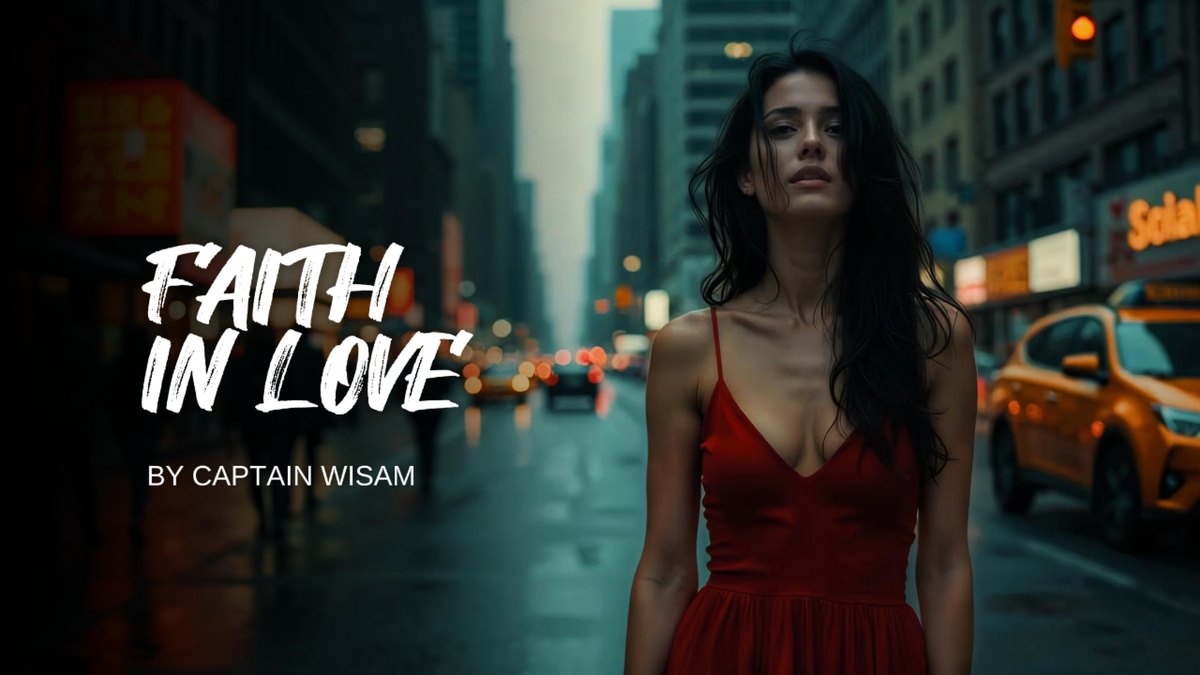
Awarded at the World Film Festival in Cannes during the December 2025 edition with the Best Song award, Faith in Love is a music video written, directed and composed by Abdul Salim Lodhi, aka Captain Wisam, who turns artificial intelligence into a true creative partner. A conversation.
Abdul Salim Lodhi (Captain Wisam), welcome to the World Film Festival in Cannes interviews. Thank you for talking to us! Let’s dig right in if that’s OK. You are tackling the themes of faith and love in one fell swoop. Revisiting universal standards is a daunting task, yet the result is fantastic. How long was this project in the making?
Thank you very much. It is an honor to be part of this conversation.
The actual creation of Faith in Love happened over several intense days and many sleepless nights. Once the idea took hold of me, I became completely immersed in it. I spent countless hours writing lyrics, creating visuals, refining scenes, experimenting with music, and searching for the exact emotional atmosphere I wanted to achieve.
However, while the production happened quickly, the emotions behind it were collected over many years. The song explores heartbreak, betrayal, loneliness, and the painful moment when someone begins to lose faith in love itself.
I wanted Faith in Love to feel more like an emotional experience than a song. Every lyric, visual, and frame was created to express the feeling of loving someone completely and realizing that the person you trusted most has become the source of your deepest pain.
The project was created in days, but the emotions behind it were collected over years.

Care to tell us more about how love became your theme choice? If that’s not too personal, tell us how this resonates with you?
Love is probably the most universal human experience. Every person, regardless of language, culture, religion, or background, understands what it means to love and what it means to lose.
What interested me was not the beginning of love. Most stories focus on falling in love. I became fascinated by what happens afterward—when trust is broken, when expectations collapse, and when someone is left alone with memories that refuse to disappear.
The lyrics of Faith in Love explore that emotional darkness. It is about giving someone your entire heart and discovering that your love was not valued the same way.
The song is intentionally dark because heartbreak is dark. It doesn’t always provide answers or closure. Sometimes it simply leaves us questioning everything we once believed.
I think that emotional vulnerability is what makes the song relatable. Most people have experienced some version of that feeling in their lives.
What’s your favorite cinematic medium and why?
I am deeply attracted to cinematic storytelling that combines music, visuals, atmosphere, and emotion into a single experience.
If I had to choose one medium, it would be cinematic music films and animation because they allow emotions to become visible. Music speaks directly to the heart, while visuals create memories that remain with the audience.
My visual style is heavily influenced by European art and cinema. In 2016, I had the opportunity to visit France and travel through parts of Europe. Those experiences left a lasting impact on me.
The architecture, museums, paintings, historical streets, and artistic culture inspired me deeply. European artists have a remarkable ability to express emotion through light, shadows, color palettes, symbolism, and atmosphere. That artistic influence continues to shape my work today.
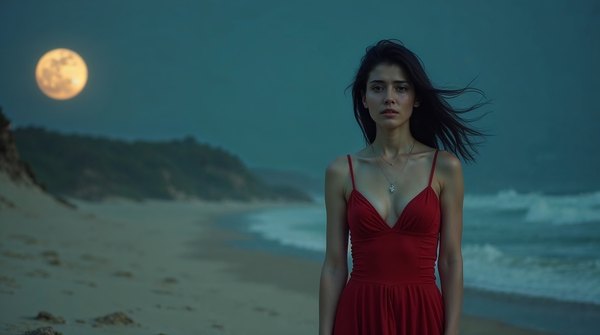
Many of the visual choices in Faith in Love—the dark mood, loneliness, muted tones, cinematic compositions, and emotional imagery—were inspired by those experiences.
Even when I use cutting-edge AI tools, the artistic inspiration often comes from traditional art, cinema, and human creativity.
For me, technology creates the image, but art gives it meaning.
The voice range is so important here and your singer’s voice is perfectly husky and feels eerie and feather-light at the same time. Tell us more.
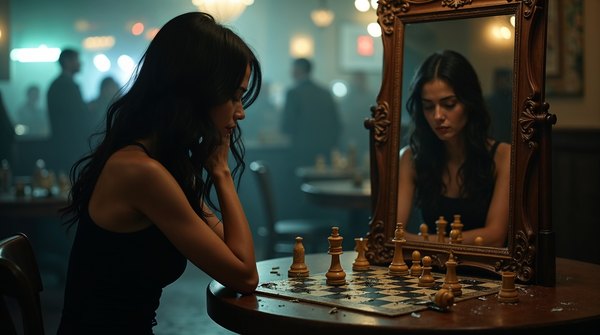
The voice in Faith in Love is actually a synthetic AI female vocal.
Many people are surprised when they learn that because they assume emotional performances can only come from human singers. My approach was different. I wasn’t searching for a singer. I was searching for a feeling.
I wanted a voice that felt fragile, haunting, distant, and emotionally broken. A voice that sounded as though it was carrying memories, regret, and loneliness.
The dark indie atmosphere of the song allowed that vocal character to exist in a very cinematic space. Together, they create a dreamlike feeling—beautiful, yet painful.
For me, the voice becomes another character in the story. It doesn’t simply sing the lyrics. It carries the emotional weight behind them.
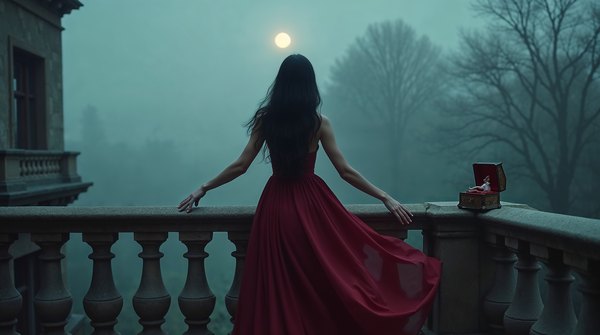
What was the part of AI in this project? This question is intertwined with the previous one.
AI played a significant role throughout the project—from the synthetic vocal performance to the image generation, video creation, visual development, and cinematic experimentation.
However, I believe there is a misconception that AI creates art by itself.
My experience has been completely different.
Behind every image, every scene, every sequence, and every visual decision were countless hours of imagination, experimentation, revisions, failures, and sleepless nights.
The technology generates images and possibilities.
The artist creates the vision.
For me, prompts are not commands.
Prompts are small stories.
Every prompt contains emotion, atmosphere, visual language, symbolism, camera direction, lighting, and narrative intention. In many ways, writing prompts feels similar to directing a film.
I have been a creative person since childhood. I loved writing stories, drawing, painting, and creating things from imagination. The challenge was never creativity. The challenge was resources.
Traditional filmmaking often requires large budgets, crews, equipment, actors, and production teams. As an independent artist, many of my ideas remained trapped inside notebooks and imagination because I simply could not afford to bring them into reality.
AI changed that.
For the first time, I could transform my writing, visual imagination, and cinematic storytelling into complete artistic works that people could actually experience.
I don’t see AI as replacing artists.
I see AI as empowering artists.
Just as cameras expanded painting and digital technology expanded filmmaking, AI is expanding what independent creators can achieve.
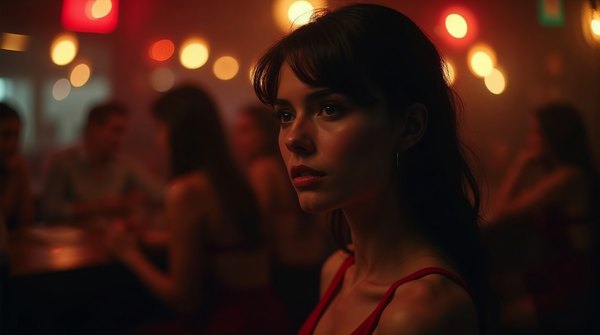
How much of your personal life do you instill into your art? How do you manage your personal/professional life balance? Or is this all just an illusion, while chaos is at play?
Creativity has been part of my life for as long as I can remember.
Since childhood, I have loved writing stories, drawing, painting, imagining worlds, and creating things from nothing. Those creative instincts never disappeared, even while I built a professional career in technology.
Today, I work as a software architect. My professional life is built on logic, systems, engineering, and problem-solving. But there has always been another side of me—a storyteller who wanted to create music, films, and visual experiences.
For many years, those two worlds existed separately.
AI unexpectedly became the bridge between them.
It allowed the engineer and the artist within me to finally collaborate.
While Faith in Love is not a direct autobiography, the emotions inside it are genuine. The observations, the vulnerability, the questions about trust, loss, and human connection all come from real experiences and reflections.
As for balance, sometimes it feels organized and sometimes it feels like beautiful chaos.
But I think creativity often emerges from that space between logic and emotion.
That is where I create.
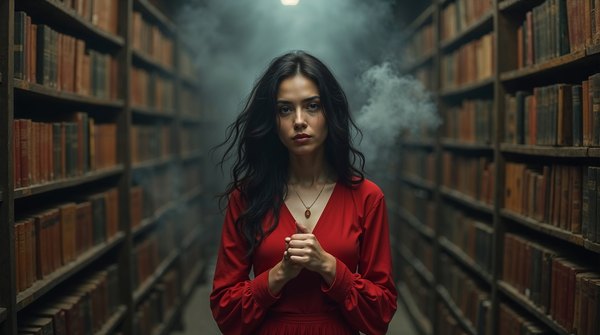
Can you tell our audience about your upcoming artistic plans?
I believe we are witnessing the beginning of a new era of storytelling.
While I am known today as a songwriter and filmmaker, I also come from a technology background with nearly 18 years of professional experience as a software architect. Throughout my life, I have been equally fascinated by both art and science.
Alongside music and filmmaking, I have always had a deep interest in technology, innovation, space exploration, the mysteries of the universe, and the possibility of life beyond Earth. These subjects have inspired me since childhood and continue to shape my imagination today.
Many of my future projects will continue exploring human emotions such as love, loss, hope, and identity. But I also want to expand into larger cinematic stories that combine science, technology, space exploration, futuristic civilizations, artificial intelligence, and humanity’s future beyond Earth.
As the founder of BYNDMARS, my long-term vision is to create films and cinematic experiences that bring together art, science, imagination, and technology. I am particularly interested in creating stories about space travel, extraterrestrial life, distant worlds, human innovation, and the challenges humanity may face as we move beyond our planet.
For me, science and art are not opposites. They are two different ways of exploring the same question:
Who are we, and what lies beyond the horizon?
My goal is not simply to make content.
My goal is to create stories that inspire people to feel, to dream, to question, and to imagine possibilities that do not yet exist.
Technology will continue to evolve. Tools will continue to change.
But curiosity is timeless.
And that curiosity—about love, humanity, science, and the universe—is what I will continue to explore through my art.
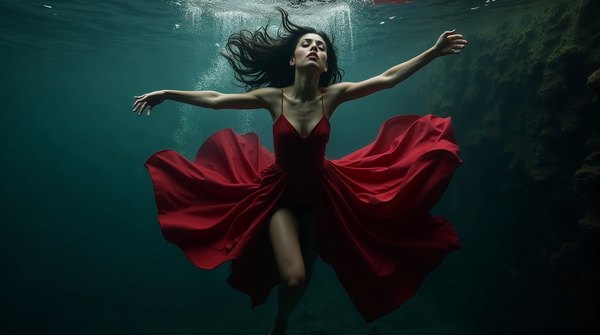
What is your vision of Post-COVID Cinema?
Post-COVID cinema is becoming more intimate and emotionally driven, as audiences increasingly consume films on mobile devices and social media platforms. This shift has created a new era of app-based cinema, where short films and storytelling are optimized for small screens and digital attention.
AI and AI-driven content creators are becoming an important part of this future. AI tools now help filmmakers with music, visuals, editing, and storytelling, enabling more creators to express their ideas without traditional barriers. I believe the future of cinema will blend technology, social platforms, and human emotion—where AI enhances creativity, but authentic storytelling remains at the heart of every film.
I would also like to express my gratitude to Karolina Bomba for her vision and support, and to the World Film Festival in Cannes for awarding Faith in Love. France has always been a major inspiration for my cinema since my first visit in 2016, and it continues to influence my creative journey.

BIO
Biography of Abdul Salim Lodhi
“For me, technology creates the image, but art gives it meaning.”
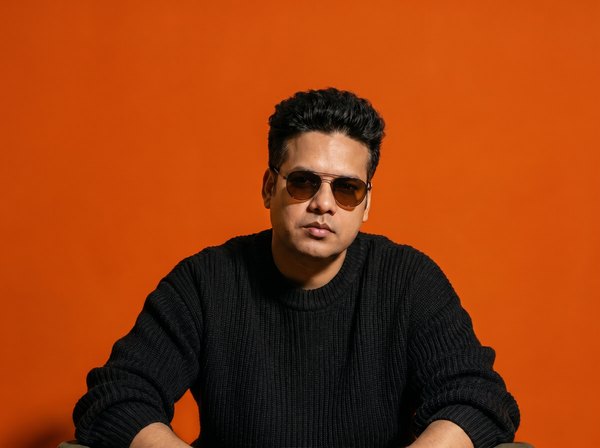
Abdul Salim Lodhi (Artist Name: Captain Wisam) is a creative artist, filmmaker, and songwriter known for crafting emotionally powerful sci-fi and futuristic narratives. His work explores the human condition through imagination, emotion, and cinematic storytelling, blending reality with the surreal to create immersive visual experiences.
As an AI creative director, Captain Wisam uses advanced technology and AI as a medium to build cinematic worlds—transforming ideas, poems, and songs into vivid visual realities. He writes original multilingual songs primarily in Hindi and adapts them into English and other languages, using AI as a collaborator to amplify emotional impact while preserving artistic authorship.
His films and music videos are characterized by high emotional intensity, strong cinematic design, and rich storytelling—often set in space, futuristic worlds, and technology-driven realities. With a deep passion for human behavior, emotions, and powerful visual narratives, Captain Wisam creates art that speaks to the heart while pushing the boundaries of modern cinema.
Filmography
Faith in Love — Short Music Film (English)
Roles: Writer • Director • Composer
Awards & Selections:
• World Film Festival in Cannes – Winner (Best Song)
• Athens International Monthly Art Film Festival – Honorable Mention
• Miami Art Tech Summit – Official Selection
• Asian Talent International Film Festival – Winner
GUZARA — Short Animated Music Film (Hindi)
Roles: Writer • Director • Producer
Awards & Selections:
• Global Independent Film Festival of India – Award Winner
• Jaipur International Film Festival – Nominee
• Bollywood Hollywood Film Festival – Official Selection
DECISION (2026) — Short Film | AI Narrative | 7 min 23 sec
Roles: Writer • Director • AI Visual Artist • Editor (Solo)
Synopsis: A peace-driven short film encouraging humanity to avoid war, embrace calm and joy, and reconnect with life across the universe and galaxies.
Official links
X — Captain Wisam: x.com/CaptainWisam
Read also
Interview with Susan Mey Lee Lim, director, producer and lyricist of “Synthetic Me”
Interview with Sutou Gou, composer of “Who Killed My Mother?”
Interview : Isabelle Rouault-Röhlich

