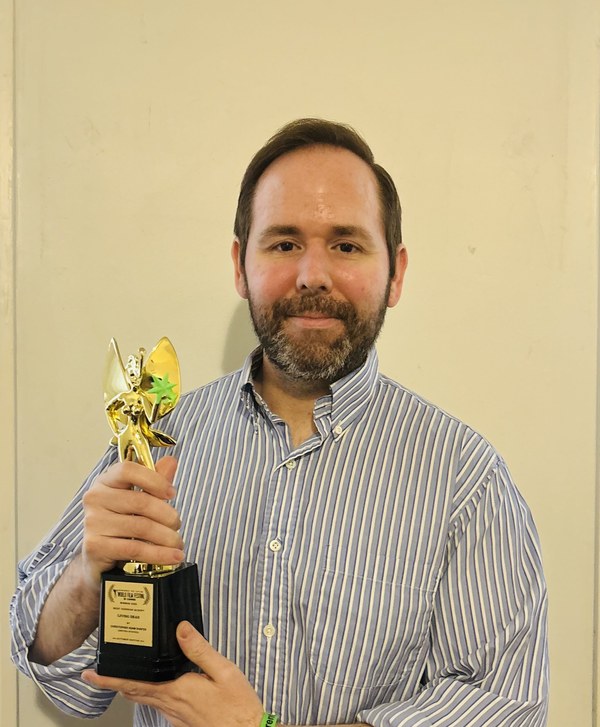
Winner of the Best Horror Script award at the October 2025 edition of the World Film Festival in Cannes, Living Dead is an American horror screenplay written by Chris Shafer. Michael, a man with terminal cancer, watches the world collapse into a zombie apocalypse in which his illness becomes his only protection. Meet its screenwriter.
The title Living Dead carries a sharp sense of irony. It usually refers to zombies, but here it seems to define Michael himself, your protagonist living with cancer. How did the idea come to you to link a terminal illness with immunity in a zombie apocalypse, turning his greatest weakness into his only protection?
When thinking of how to elevate a typical zombie film, I first thought how it might be interesting if the main character is dealing with his impending death, and his fear of leaving the world behind. Then going from that to a world where everyone else is suddenly facing what he’s been dealing with all along. I knew I wanted to end on a twist that lived up to the irony of the title.
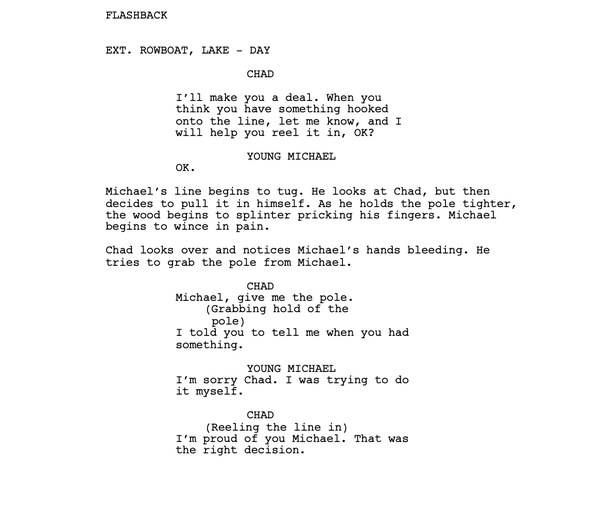
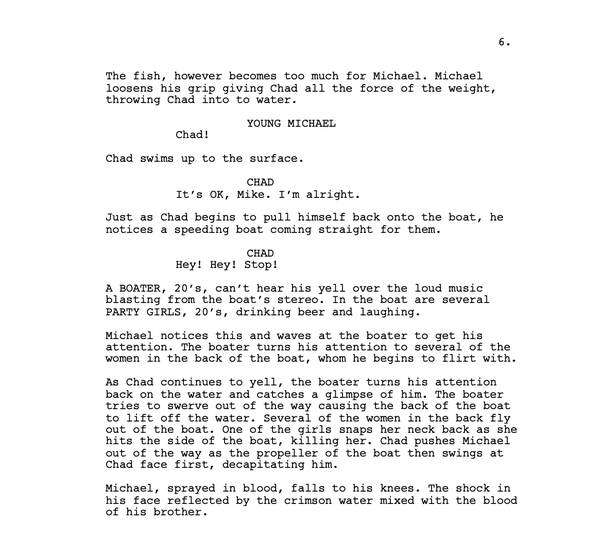
The script opens with a strikingly violent and natural image: an alligator devouring its own offspring. This moment is immediately followed by an innocent fishing scene between the two brothers. Was it your intention, from the very first page, to suggest that nature—whether in the form of a virus, cancer, or a predator—is fundamentally indifferent and cruel, long before the zombies appear?
That was definitely intentional. I wanted to portray that both the alligator isn’t evil, it acted on instinct, and that at any time in this world I was building, something cruel could happen without warning or reason. That idea carries on throughout the story whether it’s the diagnosis, David’s past decision, Rob’s secret, or even what Michael discovers when he returns home post-apocalypse.
On page 95, there is a devastating moment where Michael points the gun at himself as the zombies overrun the room. He says: “Not cancer… not zombies… my choice.” Would you say that the true stake of the film is not survival itself, but the reclaiming of free will in the face of an inevitable death?
That is exactly it! From the opening scene, Michael feels his life is out of his control. The diagnosis then makes him believe it is truly out of his control. By the end of the story, he realizes it has always been his decision to make. So it’s always been about reclaiming agency and acceptance, even at the end. I think most of the characters in the story achieved that.
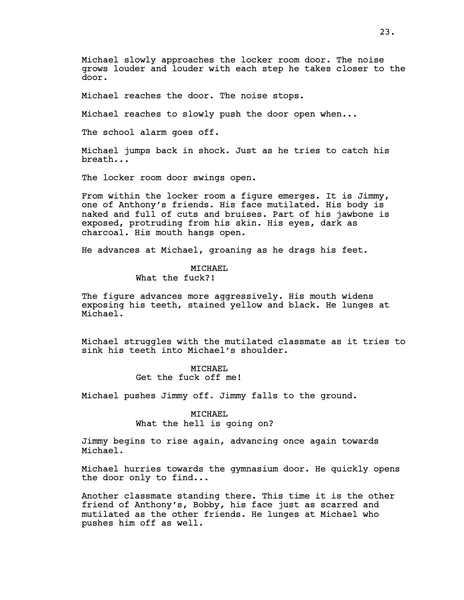
In the final scene, the zombies ignore Michael because, as he explains in voice-over, “death is all they can smell on me”. It’s a fascinating reinvention of camouflage—somewhat reminiscent of World War Z, but far more intimate. Did you ever hesitate about the mechanics of this immunity, or was it clear from the beginning that his illness had to become his shield?
It became clear to me early on that his illness needed to function as both his burden and in the end become his protection. That twist reinforced not only the title, but Michael’s agency he sought throughout.
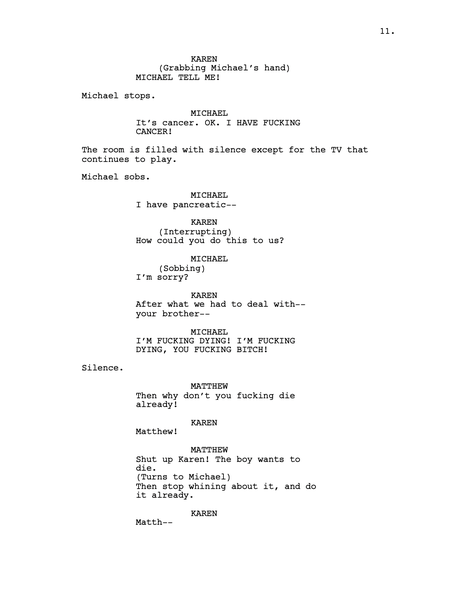
Michael begins the story fearing death and the idea of “leaving everyone behind.” By the end, the irony is complete: he is the only survivor, and it is everyone else who has left him. Do you think the true horror of the script lies not in the monsters, but in this absolute solitude—being the last one alive, unable even to die?
I do. Michael starts the story afraid of dying and losing people, but by the end, it’s a cruel irony. Survival isn’t necessarily a victory if it means isolation.
You won in the category Best Horror Script, yet the emotional core of the film is a medical drama about accepting the end of life. How did you work to maintain that balance, ensuring that the horror elements—gore and tension—never overshadow Michael’s emotional journey and his illness?
I think it comes from the dialogue and the characters themselves. If a scene was just about gore or tension, then it didn’t belong. Every horror moment had to push a character forward in a meaningful way.
What is your vision of post-COVID cinema? Do you think there will be notable changes?
I think with COVID putting many theaters out of business, streaming has become a large chunk of the new norm for audiences. Staying inside our homes for well over a year changed how people found ways to entertain themselves. The pros of post-COVID cinema is the renewed interest in original stories, which thrive in a streaming world. The cons of post-COVID cinema is the possible extinction of theaters. Movie theaters play such an important role in cinema, I think it is important we ensure they survive. Since big IP movies are the biggest source of revenue to keep movie theaters alive, I think it is crucial that everyone from the studio execs on down to the writers room stay true to the source material of big IPs, as the audiences have been signaling they won’t show up in numbers to IPs that stray too far from the source. Leave the passion projects for the A24s of the world. Let the audience members escape from reality with the big studio films, and we will regain their trust back, and fill back the seats of auditoriums.
BIO
Biography of Chris Shafer
I am a writer/video editor born in Miami, FL, and currently based in Boston, Massachusetts. I have a BA in Theatre Arts from Stetson University and a Screenwriting Certificate from Emerson College. I have won a regional Emmy and two Telly awards for my video editing work. I have worked as a video editor/motion graphics artist for over two decades, and am now getting back into screenwriting. In my time as a video editor, I have worked for higher ed institutions such as Harvard, MIT, and Stanford. I have also worked for NBC Universal and the real estate conglomerate CoStar Group, who owns both Apts.com and Homes.com. In my role at CoStar, I traveled around the globe to film and edit major real estate conferences including MIPIM, which takes place annually in Cannes. After writing Living Dead, I am now currently writing/polishing three other scripts. I love all genres, but I would say the genres I enjoy the most are the Western and Horror genres.